-
Cúrsaí
Cúrsaí
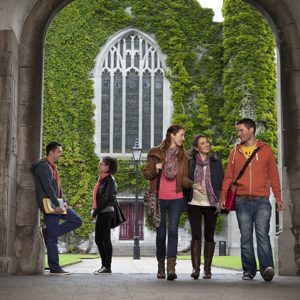
Tá roghnú cúrsa léinn ar cheann de na cinntí is tábhachtaí dá ndéanfaidh tú choíche! Féach na cúrsaí atá againn anseo agus an méid a deir mic léinn agus léachtóirí faoi na cúrsaí sin a bhfuil spéis agatsa iontu.
-
Saol na hOllscoile
Saol na hOllscoile
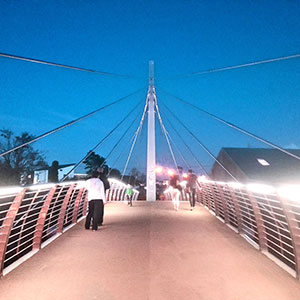
Chuile bhliain roghnaíonn os cionn 4,000 duine Ollscoil na Gaillimhe mar chéad rogha. Faigh amach faoin saol in Ollscoil na Gaillimhe anseo.
-
Eolas Fúinn
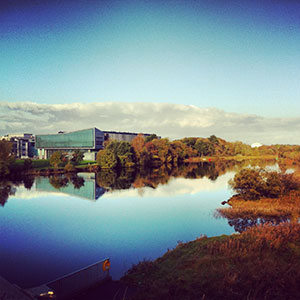
Eolas faoi Ollscoil na Gaillimhe
Bí ar an eolas faoin Ollscoil seo agus na fáthanna a bhfuil sí chomh speisialta sin – an stair thar a bheith spéisiúil a bhaineann leis an Ollscoil agus an nuacht is déanaí agus na hócáidí atá ar na bacáin.
-
Coláistí & Scoileanna
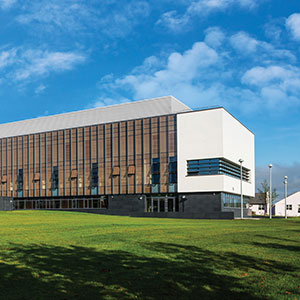
Coláistí & Scoileanna
Tá aitheantas idirnáisiúnta bainte amach ag Ollscoil na Gaillimhe mar ollscoil atá á treorú ag an taighde agus rún daingean aici teagasc den chéad scoth a chur ar fáil i réimsí éagsúla saineolais.
-
Taighde
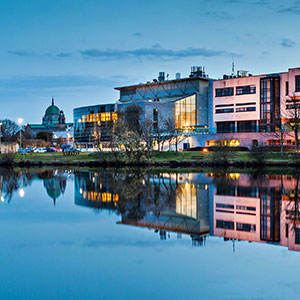
Nithe Fónta á gCruthú as Smaointe Úra
Tugann ár dtaighdeoirí aghaidh ar chuid de na dúshláin is práinní san 21ú Céad.
-
Gnó & Tionscal
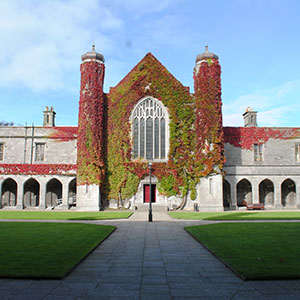
Tacaíocht do Thaighde Úrnua in Ollscoil na Gaillimhe
Déanaimid deiseanna tráchtála a chuardach agus a chothú don phobal taighde in Ollscoil na Gaillimhe, mar aon le comhpháirtíocht tionsclaíochta a chothú.
-
Alumni, Cairde & Lucht Tacaíochta
Alumni, Cairde & Lucht Tacaíochta
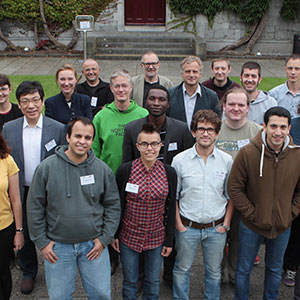
Tá os cionn 90,000 céimí de chuid Ollscoil na Gaillimhe ann ar fud an domhain. Déan nasc linn agus beidh teacht agat ar an gcomhphobal sin ar líne.
-
Rannpháirtíocht Pobail
Rannpháirtíocht sa Phobal
In Ollscoil na Gaillimhe, creidimid go n-éireoidh níos fearr leat más féidir leat an méid a fhoghlaimíonn tú a chur i bhfeidhm i do shaol féin. Is mar gheall air sin go bhfuil béim mhór ar shocrúcháin oibre nó ar thionscadail phobail i gcuid mhór dár gcúrsaí.








Latest University News
19 March 2026
Ireland’s economy needs urgent reform for future generations
University of Galway economist calls for a stronger focus on homegrown entrepreneurs, innovation and talent for high living standards
Ireland’s economic model is in need of urgent reform to sustain high standards of living for future generations, research from University of Galway has warned.
The study raises the spectre of global investment patterns shifting due to geopolitical developments, leaving Ireland increasingly depend on home-grown technological progress to drive income growth.
The research - commissioned by Stripe founders John and Patrick Collison - shows that the Irish economy has one of the highest productivity rates in the world, with decades of growth driving rising incomes and high living standards.
It notes that over the past 50 years, real income per person has tripled, rising from about €17,500 in 1970 to over €53,000 in 2023, with economic growth largely driven by foreign direct investment (FDI) from the United States.
Author of the report, Professor of Economics at University of Galway, Alan Ahearne, echoed warnings that Ireland is heavily reliant on a relatively small number of foreign-owned multinational companies.
The study states that Ireland urgently needs to build a world-class entrepreneurial ecosystem to improve its track record at forging indigenous high-growth firms with the potential to develop innovative products and services based on advanced technology.
Professor Alan Ahearne, J.E. Cairnes School of Business and Economics, University of Galway, said: “The most important ingredient for a successful entrepreneurial ecosystem is human capital and talent. Ireland, which in the past has used tax policy to attract physical capital from abroad (FDI), should now consider how to use tax policy to attract human capital from abroad to augment our existing talent base.”
In a statement to coincide with the publication of the research, Stripe founders John and Patrick Collison, said: “We welcome this research and its empirical contribution to the discussion around Ireland’s economic future. In an increasingly competitive and volatile world, putting in place the systems and conditions to accelerate scientific and technological progress will be critical for future living standards in Ireland.”
The research pointed to the crucial role of talent and human capital in creating and fostering self-reinforcing clusters of innovation.
Among the policy levers available to Irish policymakers, the research paper noted the potential use of tax policies to attract skilled professionals from abroad, similar to approaches recently introduced in other countries, and that they will likely prove the most impactful.
The report is available here.
Ends
18 March 2026
Registration open for University of Galway Spring Open Day
University of Galway is inviting prospective students, parents and teachers to explore its campus and undergraduate programmes during its Spring Undergraduate Open Day.
The event takes place on Saturday March 21st from 9am to 3pm and will feature five exhibition areas across the city-centre campus, more than 90 course and subject talks and opportunities for visitors to experience life at the university and the campus first-hand.
The Open Day provides an opportunity for prospective students to explore degree options, facilities and the student experience as they prepare for CAO 2026. Visitors can attend talks, take guided tours, and meet faculty, staff and current students across a variety of disciplines.
Academics and support staff from the University’s College of Arts, Social Sciences and Celtic Studies will also be hand to reassure prospective students, parents and guardians and teachers that there are no changes are planned to current Arts programmes.
The University offers more than 60 internationally recognised undergraduate programmes, including Medicine, Nursing, Health Sciences, Arts, Science, Engineering, Business, Law, and Hotel Management, with over 90% of programmes offering work placements or study abroad opportunities.
Highlights of the Open Day include:
Accommodation Talk – Learn about campus living, accommodation options, and how to settle into university life at the Purple Zone at 10am.
Nursing and Midwifery Tours - Tours of the state-of-the-art facilities depart from Áras Moyola, Green Zone at 12.45pm and 1.30pm.
Law and Moot Court Experience - Step inside the School of Law's Moot Court to experience a real courtroom. Five tours available throughout the day with registration taking place at Stand 45 in the Orange Zone.
Science and Engineering Tours - Explore the Engineering Building with tours starting from the Green Zone foyer.
Chemistry Lab Tours – Register at Stand 18 in the Purple Zone for hands-on lab tours.
Drama Masterclass and Theatre Tours - Drama enthusiasts can attend a Masterclass at 1pm or tour the O'Donoghue Drama and Theatre Performance Centre. Meet point is in the Blue Zone foyer at 11.30am.
Sports and Scholarships – Meet coaches and athletes and learn about sports scholarships and cutting-edge facilities in The Cube, Orange Zone.
Zoology Museum Tours – Discover the fascinating world of animals at the Zoology Museum, with guided tours highlighting unique collections and interactive exhibits. Registration is available at stand 13 in the Purple Zone.
Students can also explore campus accommodation, and parents can attend a talk at 11:30am offering guidance on supporting students during the transition to university life.
Sarah Geraghty, Director of Student Recruitment and Outreach at University of Galway, said: “Our Open Day is the perfect chance for students to step inside their future and see what's possible. From world-class facilities to Moot Court to hands-on tours, students can truly experience university life.
“Our College of Arts, Social Sciences and Celtic Studies team will be on hand to chat to students and parents about all our Arts degrees and to reassure students that we have no plans to change any of our arts programmes. We can’t wait to meet future students and help them discover the study paths and career opportunities that inspire them most.”
Advance registration is required. Full programme details and registration are available at www.universityofgalway.ie/opendays, or email opendays@universityofgalway.ie.
Ends
17 March 2026
Royal Irish Academy elects Professor Daniel Carey as President
Dan Carey, Professor of English at University of Galway, has been elected as the 59th President of the Royal Irish Academy (RIA).
Professor Carey succeeds Professor Pat Guiry at the conclusion of his Presidential term at the helm of Ireland’s independent learned society and leading body of experts in the sciences, humanities and social sciences.
Elected to membership of the Academy in 2014, Professor Carey has been an active contributor to its work, serving as Vice-President in 2017–18 and 2020–21; Secretary for Humanities and Social Sciences from 2021–24; and Secretary from 2024–26. He also served as Chair of the Irish Research Council from 2022 to 2024.
Commenting on his election, Professor Carey said: "It is a great honour to be elected President of the Royal Irish Academy. I look forward to building on the Academy’s strengths by contributing our expertise, engaging the public, developing research programmes, and supporting governance and staff. We will deepen key relationships with the Higher Education Authority, the Department of Further and Higher Education, Research, Innovation and Science, and Research Ireland, while growing the international profile of our work. Alongside this, we will strengthen fundraising to support core activities, advance equality, diversity and inclusion, and expand the Academy as a space of interaction and engagement, enhancing our convening power through the work of our programmes. I look forward to working with Members and staff to reinforce the Academy’s commitment to public life, north and south."
The Academy also paid tribute to outgoing President Professor Pat Guiry, thanking him for his dedicated leadership and his profound commitment to the Academy’s Members, partners and staff, and to the wider research, academic and policy communities.
Lynn Scarff, Executive Director, RIA said: "The role of President carries responsibility for stewarding the Academy and sustaining its influence as a trusted voice in public discourse and policy formulation. I look forward to working with Professor Carey as President, continuing to strengthen the impact of the Royal Irish Academy, expand collaborative opportunities, and enhance its service to scholarship and the public good."
Recent past presidents include Dr Mary Canning (2020–2023), Professor Peter Kennedy (2017–2020) and Professor Mary E. Daly (2014–2017).
Ends